The Math Doesn't Work: Inside Canada's Widening Deportation Gap

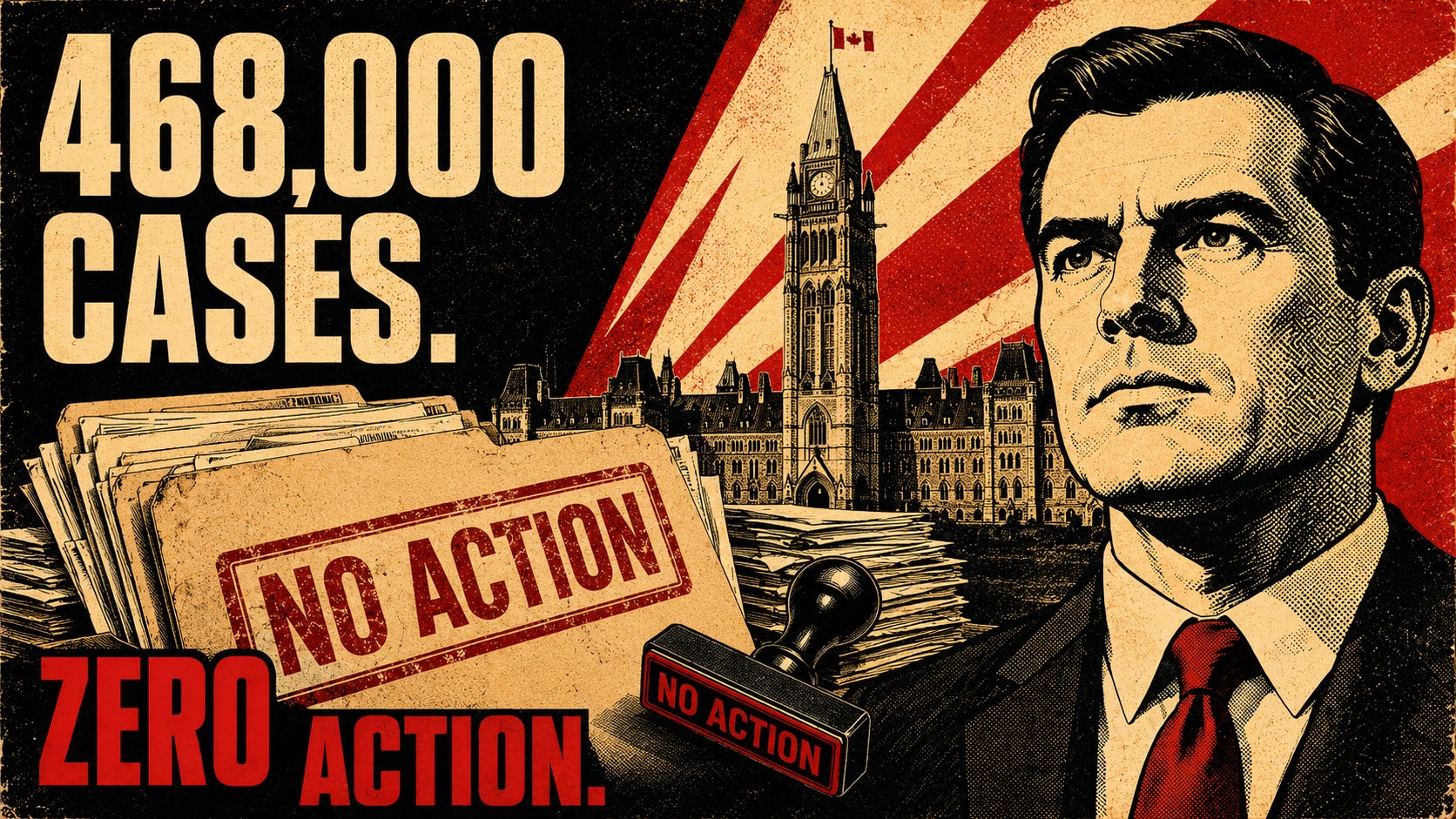
There is a number CBSA does not put in its press releases: 468,628.
That’s how many active cases in the agency’s own removal inventory are marked “no action” - meaning nobody is actively working to remove that person from the country. It’s not a leak, not an estimate, not an opposition talking point. It’s in CBSA’s own case-management data, as of October 31, 2025. It sits inside a total inventory of 556,690 cases the agency is formally tracking, alongside another 33,190 marked “wanted” and 25,330 the agency has classified as “not possible to remove.”
Put plainly: for every case CBSA is actually working, there are roughly nine sitting untouched.
Editor’s note: I cover stories legacy outlets often sidestep, and paid subscribers help fund that work. If you value independent reporting and want more pieces like this, consider upgrading.
This is the story underneath the headlines about “record deportations” - a system that is genuinely enforcing more than ever, and still losing ground.
The government’s own number
Start with the population nobody wants to put a firm figure on. In a 2024 briefing to the House of Commons Standing Committee on Citizenship and Immigration, Immigration, Refugees and Citizenship Canada put the undocumented population as high as 500,000 to 600,000. A separate Department of Finance briefing note - obtained through Access to Information - used the same range, describing it as people who “overstayed visas or have had asylum claims rejected,” while cautioning that “evidence in this area is rather poor and possibly unreliable.”
